
Virginia cannabis dispensary license 2026 readiness starts here. Updated: January 2026
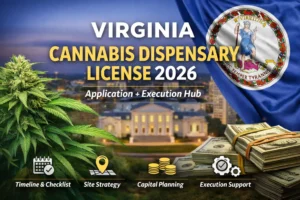 Virginia is moving toward an adult-use cannabis retail rollout targeted for 2026. If you intend to compete in the next window (many teams plan around a July scenario), the advantage is not last-minute writing—it’s execution readiness: clean ownership/control planning (with counsel), credible capitalization, site strategy, operating systems, and a timeline you can actually deliver.
Collateral Base provides business consulting and execution planning — not legal services. For legal structuring, disclosures, and regulatory interpretation, work with Virginia counsel. We build the operator plan that makes your application (and your launch) believable.
Start here
- Virginia cannabis dispensary license 2026: what we’re tracking right now
- Virginia cannabis dispensary license 2026 timeline (planning view)
- Virginia cannabis dispensary license 2026 readiness checklist (90 days)
- Virginia cannabis dispensary license 2026 capital + runway model
- Virginia cannabis dispensary license 2026 site + locality strategy
- What we build for you (deliverables)
- Top failure modes (and how to avoid them)
- Resources
- FAQ
- Request a Virginia readiness call
Virginia cannabis dispensary license 2026: what we’re tracking right now
Virginia’s adult-use retail framework is still being finalized through legislation, implementation details, and agency buildout. You can follow the official agency and legislative materials here:
- Virginia Cannabis Control Authority (official site)
- Virginia Legislative Information System (LIS)
- Joint Commission cannabis retail transition report (published document)
- Policy summary coverage (Virginia Mercury)
Operator reality: you do not need “final rules” to start building the plan. The teams that win in regulated markets look safest: funded enough, site-ready enough, and operationally mature enough to open on time and stay compliant.
Virginia cannabis dispensary license 2026 timeline (planning view)
Dates depend on enabling legislation and Cannabis Control Authority implementation. But the work sequence is predictable—and the long-lead items do not fit into the last two weeks.
| Phase | What happens | What you should be doing |
|---|---|---|
| Now → Spring 2026 | Program details, scoring, documentation standards, and implementation posture firm up | Build plan, runway model, site strategy, vendor/security concept, org chart, operating systems |
| Mid-2026 (many plan around July) | Application window(s) open | Submit a consistent, defensible package backed by real execution planning |
| Late 2026 | Awards, buildout, inspections, readiness milestones | Execute buildout, staffing ramp, inventory readiness, compliance posture |
Execution reality: waiting for “final rules” is how teams lose. The winners arrive with a site strategy, runway math, and an operating plan that reads like day-one compliance is already built.
Virginia cannabis dispensary license 2026 readiness checklist (90 days)
Weeks 1–2: Strategy + constraints
- Define your target lane (adult-use retail/dispensary and any subcategories as finalized)
- Map your capitalization plan: sources, timing, contingencies, “no-surprise” cash floor
- Identify target regions/localities and practical site requirements (visibility, parking, access, buffer/zoning risk)
- Build a “non-negotiables” list: runway floor, site-control terms, vendor/security standards, timeline assumptions
Weeks 3–6: Site + operating design
- Locality due diligence: zoning/use definitions, buffers, permits, inspection timelines, political friction
- Site control strategy: LOI/lease plan that protects you from license-killing terms
- Security/access concept, inventory discipline concept, staffing ramp outline
- Vendor plan: security integrator, POS/compliance tooling, product sourcing approach
Weeks 7–12: Packaging + execution plan
- Finalize pro forma, staffing plan, and opening-day operations plan
- Create a buildout schedule with dependencies and critical path
- Compile exhibits: team bios, org chart, policies, diagrams, timeline, locality plan
- Run a “red-team” review for contradictions, missing elements, and execution gaps
If you want a practical baseline: your narrative should read like you can open on time, operate compliantly on day one, and survive the first six months without a cash crisis.
Virginia cannabis dispensary license 2026 capital + runway model
Most licensing plans fail for one reason: they are not capital-realistic. We build runway math that matches buildout realities.
- Buildout budget ranges with contingency logic (not wishful thinking)
- Working capital model from pre-opening through stabilization
- Inventory depth strategy tied to burn rate and launch sequencing
- Staffing ramp with payroll timing and training throughput
- Weekly runway scoreboard to prevent “cash ends, buildout continues” failure
Virginia cannabis dispensary license 2026 site + locality strategy
Your site plan is not “find a building.” It’s a locality risk strategy with a lease structure that doesn’t destroy you.
- Zoning/permitting due diligence checklist (fast, repeatable, documented)
- Buffer-risk and timeline friction map (what slows approvals in your target locality)
- LOI/lease readiness items (so you avoid expensive mistakes)
- Plan B site strategy if locality friction stalls site A
Related internal guide (useful for site diligence and landlord-side structures): Real estate due diligence and risk concepts.
What we build for you (deliverables)
1) Virginia market entry plan (operator-focused)
- Market entry strategy and timeline map for the Virginia cannabis dispensary license 2026 cycle
- Competitive positioning for an independent operator
- Phased launch plan: lean opening → loud opening (runway-protective sequencing)
2) Capital + runway model (the make-or-break)
- Budget ranges, working capital plan, inventory depth plan, staffing ramp plan
- Milestone-based cash plan so you do not hit a predictable liquidity wall
3) Site + locality readiness package
- Locality due diligence checklist + site scoring
- Lease/LOI readiness inputs (coordinated with your counsel)
- Backup-site strategy
4) Operating systems outline
- Security + access-control framework (operational readiness)
- Inventory and compliance process architecture
- Vendor plan and product flow planning
- Training plan and management cadence
5) Weekly execution cadence
- Weekly working session with agenda + defined outputs
- Task ownership + definition-of-done tracking
- Risk log (cash, site, vendor, timeline)
- Milestone readiness tracking through submission and buildout
Bottom line: for Virginia cannabis dispensary license 2026 competition, “documents” are not the product—opening the doors is the product.
Top failure modes (and how to avoid them)
- Paper plans: generic narratives with no runway math, no site strategy, no buildout path.
- Bad site control: signing the wrong lease too early (or the right site with the wrong terms).
- Under-capitalization: buildout starts, cash ends, momentum dies in public.
- Timeline fantasy: ignoring permits, inspections, vendor lead times, and staffing realities.
- Compliance as an afterthought: always expensive; sometimes fatal.
Regulated licensing is a credibility contest. You win by looking like the safest team to approve—because you actually are.
Resources
- Cannabis Licensing Calendar (2025–2026): State-by-State Deadlines & Requirements
- Cannabis Consultants: licensing + operations
- Related hub example: Nebraska medical cannabis dispensary license (2026)
FAQ
Do you provide legal advice for Virginia cannabis dispensary license 2026 applications?
No. Collateral Base provides business consulting and execution planning. Legal services should be handled by your counsel.
When should we start preparing for the Virginia cannabis dispensary license 2026 window?
Now. The long-lead items are runway planning, site/locality readiness, vendor planning, staffing ramp, and operating systems.
What do you need from us to begin?
Your target locality/region, budget constraints, any site leads, a draft ownership/cap table (even if preliminary), and your intended business model.
Can you help if we don’t have investors yet?
Yes. A runway-first plan often improves fundraising and prevents expensive missteps before capital arrives.
Request a Virginia readiness call
If you’re targeting Virginia and want to be prepared before the application window opens, we can build the plan, the runway, and the execution cadence that turns “interest” into a real launch.

Virginia Cannabis Dispensary License 2026: Application Requirements & Scoring Guide
Introduction: Why Virginia’s 2026 Retail Round Matters Updated March 2026: SB 542/HB 642 passed the Virginia General Assembly on March 14, 2026. Applications open by

What a Cannabis License Consultant Actually Does (And Why It Matters)
Most cannabis license applications are not rejected because the applicant lacked capital or commitment. They are rejected because a security plan was missing a required
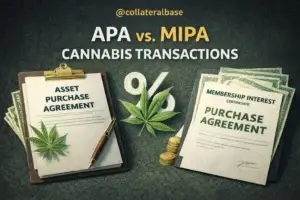
APA vs. MIPA in Cannabis: Which Deal Structure Wins?
Every cannabis acquisition comes down to a fundamental structural choice: buy the assets, or buy the entity. An Asset Purchase Agreement (APA) transfers specified assets